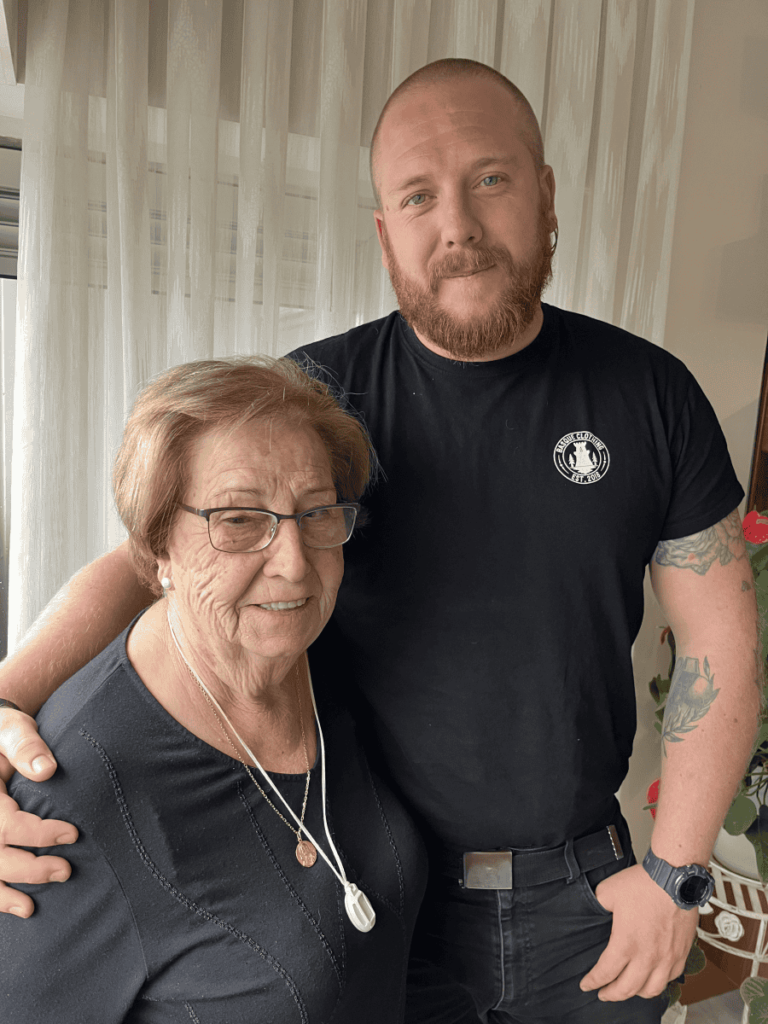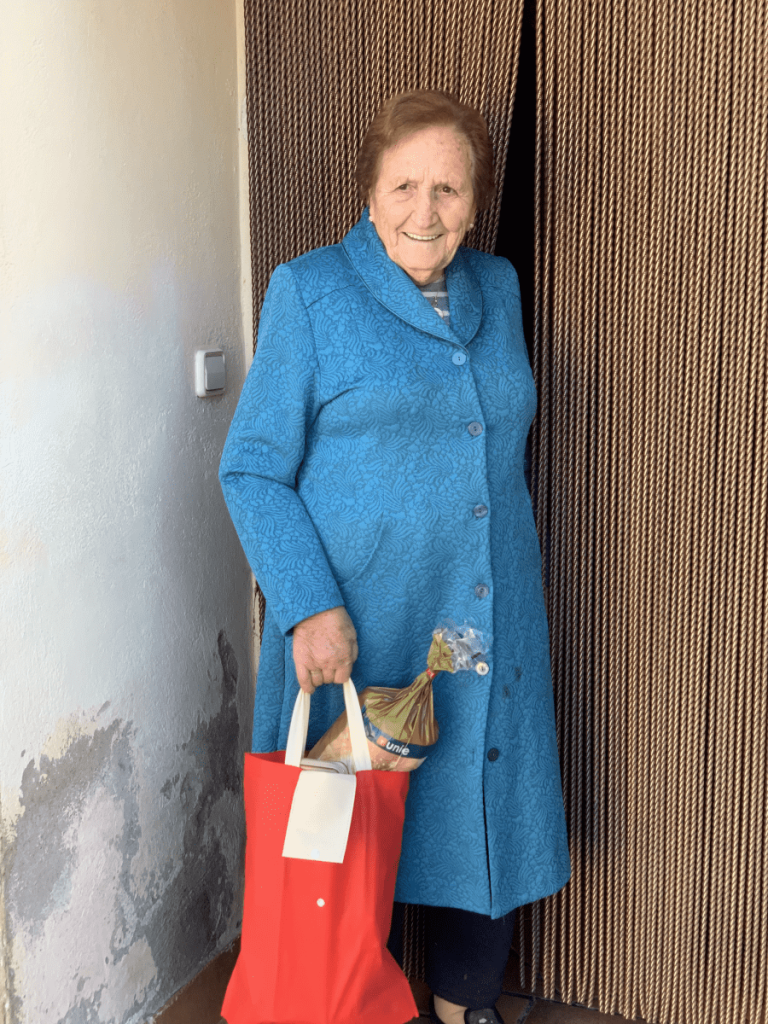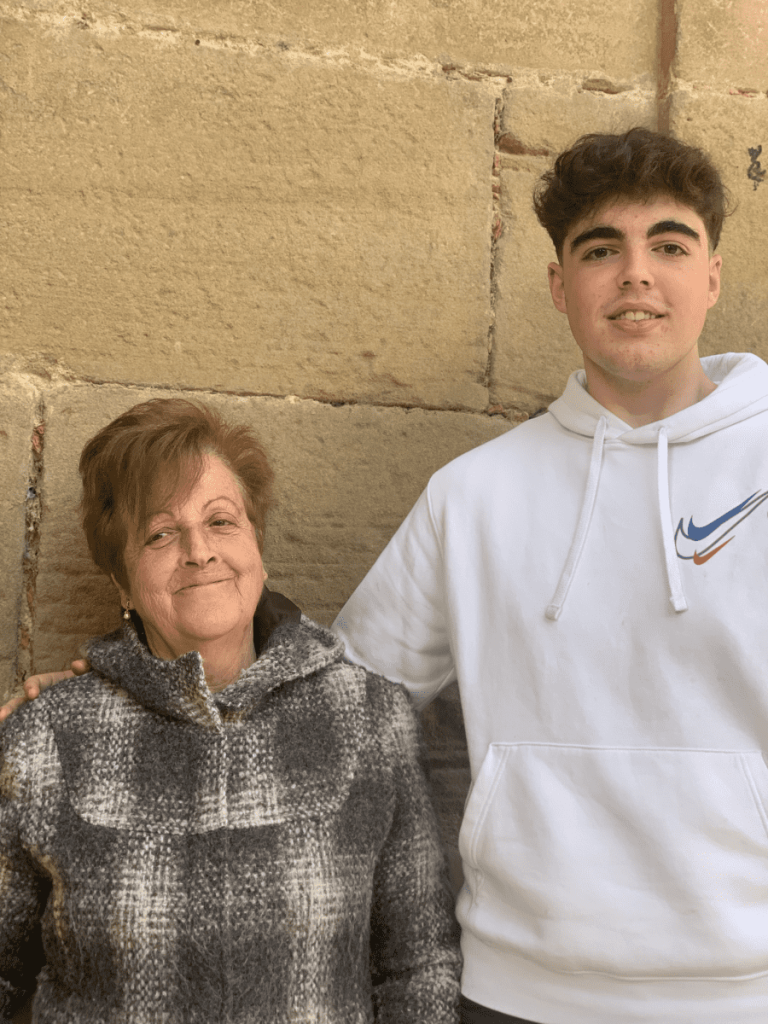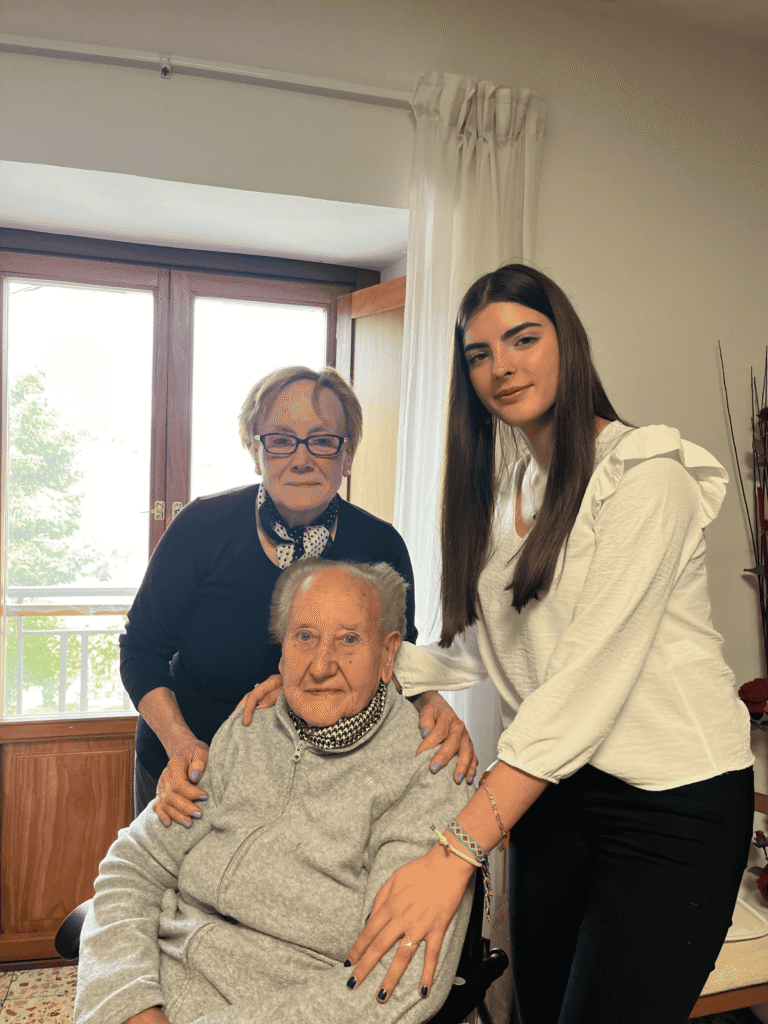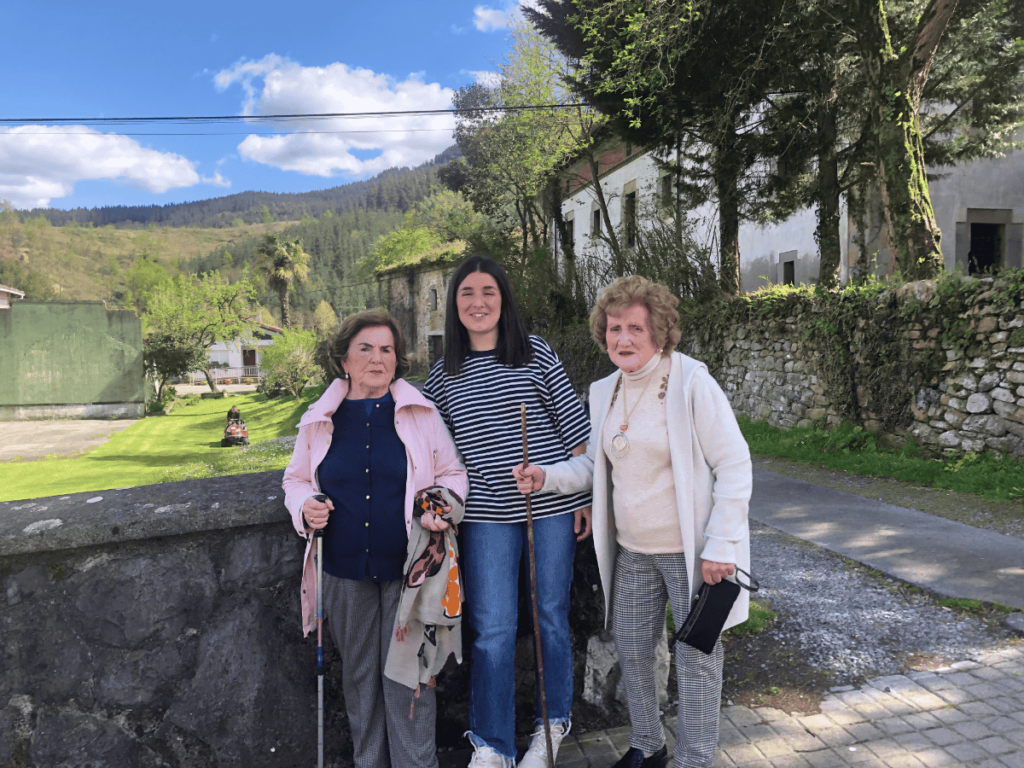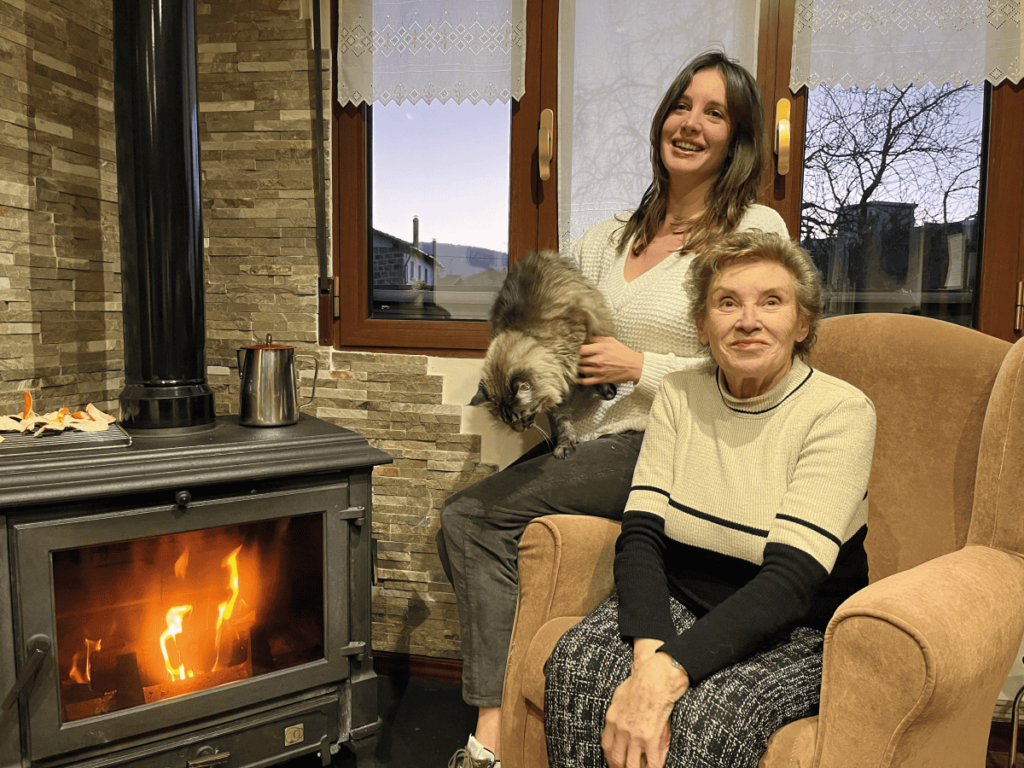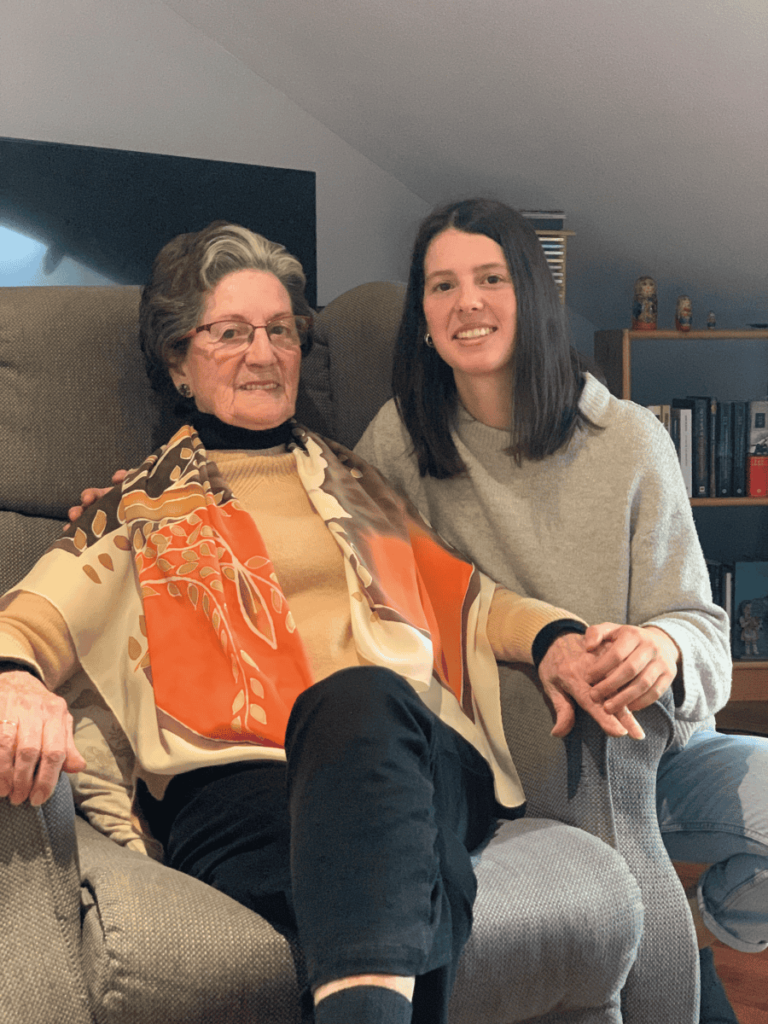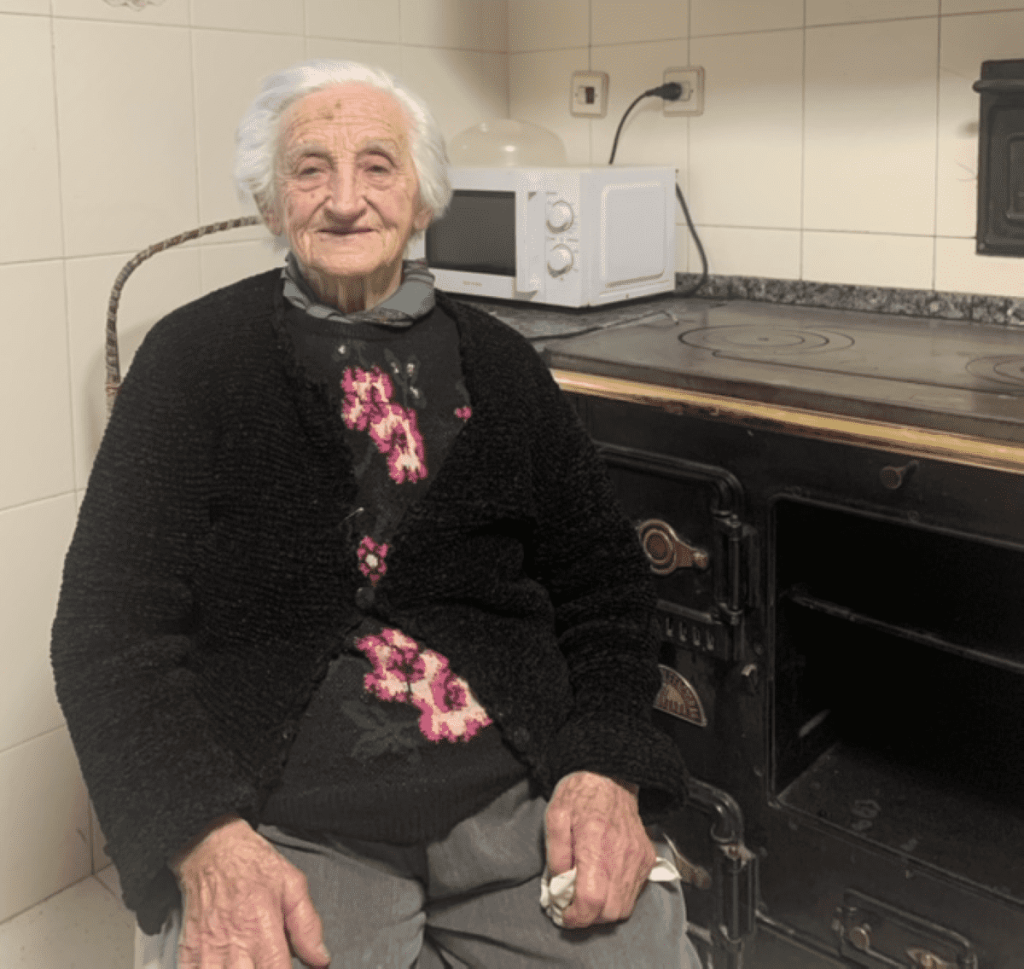

Cecilia is the name her parents wanted to give her, but they made a mistake at the registry office and named her Emilia. Everyone knows her as La Emi, the same Emi who hasn’t forgotten those old times when a poor person was poor in every sense of the word, because they didn’t own land or a house; everything they had access to belonged to someone else. Years have passed, and life has changed a lot.
Agurain has been a town with many resources, great walls and emblazoned houses, but it has also been a land of farmers, where the whole family worked from sunrise to sunset to survive rather difficult times.
Cecilia García de Vicuña, Emi, at 89 years old, remembers her mother, who worked every day of her life and could not enjoy what she has experienced after retiring, traveling and getting to know other places thanks to the Imserso.
It’s seven in the evening, it’s dark and cold. Nevertheless, Emi wraps herself in her coat and heads back down Arramel Street. Her friends are waiting for her at the senior citizens’ club. She’s done her work, and besides, now it’s time to enjoy herself.

The wealthy farmers lived a different life
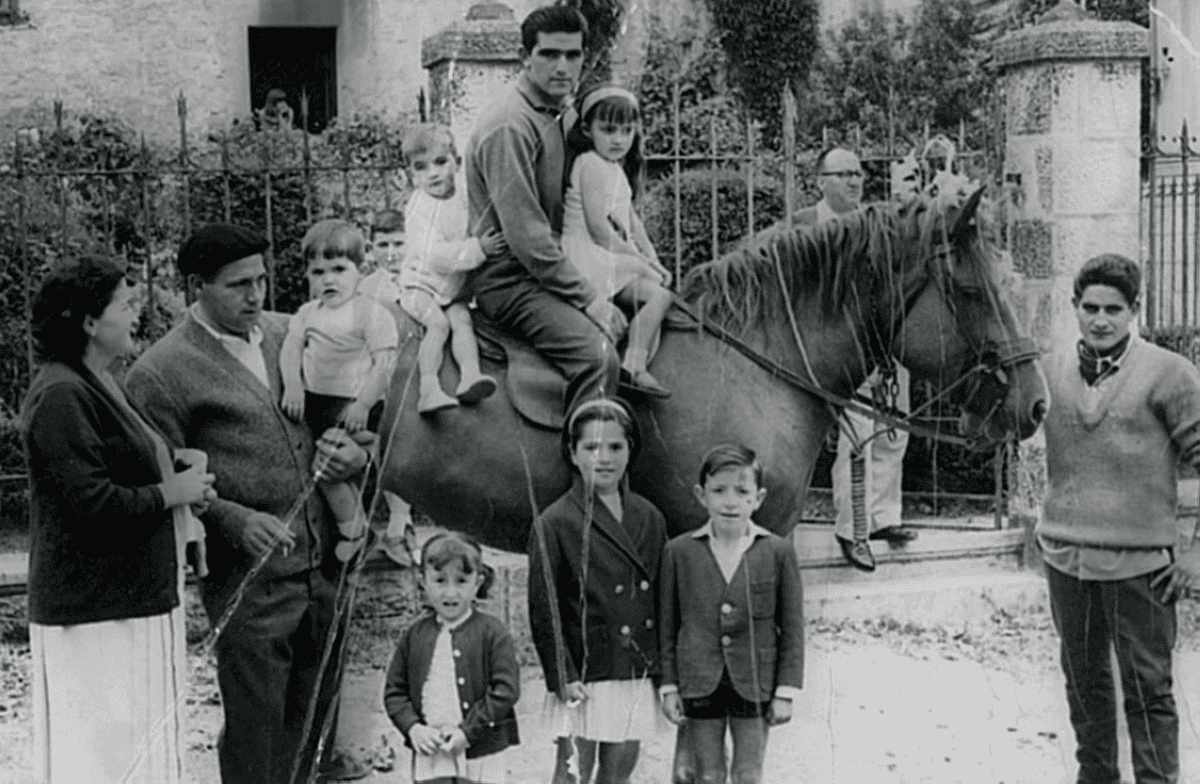
She was born in the San Juan neighborhood, surrounded by fields of grain and livestock. There were six sisters and three boys, and childhood became a race for survival.
While there was work to be done at home, I didn’t go to school, because working the land came first. Maybe in winter, a few days here and there, especially when it rained or snowed and nothing could be done in the fields. Just enough to learn to add, subtract, and multiply, and to read and write. After that, nothing more.
“We’ve lived in poverty, and we’ve always worked hard.” Emi’s father didn’t own any land, and he wasn’t even the owner of the farmhouse they lived in. The landowning farmers lived a different life.
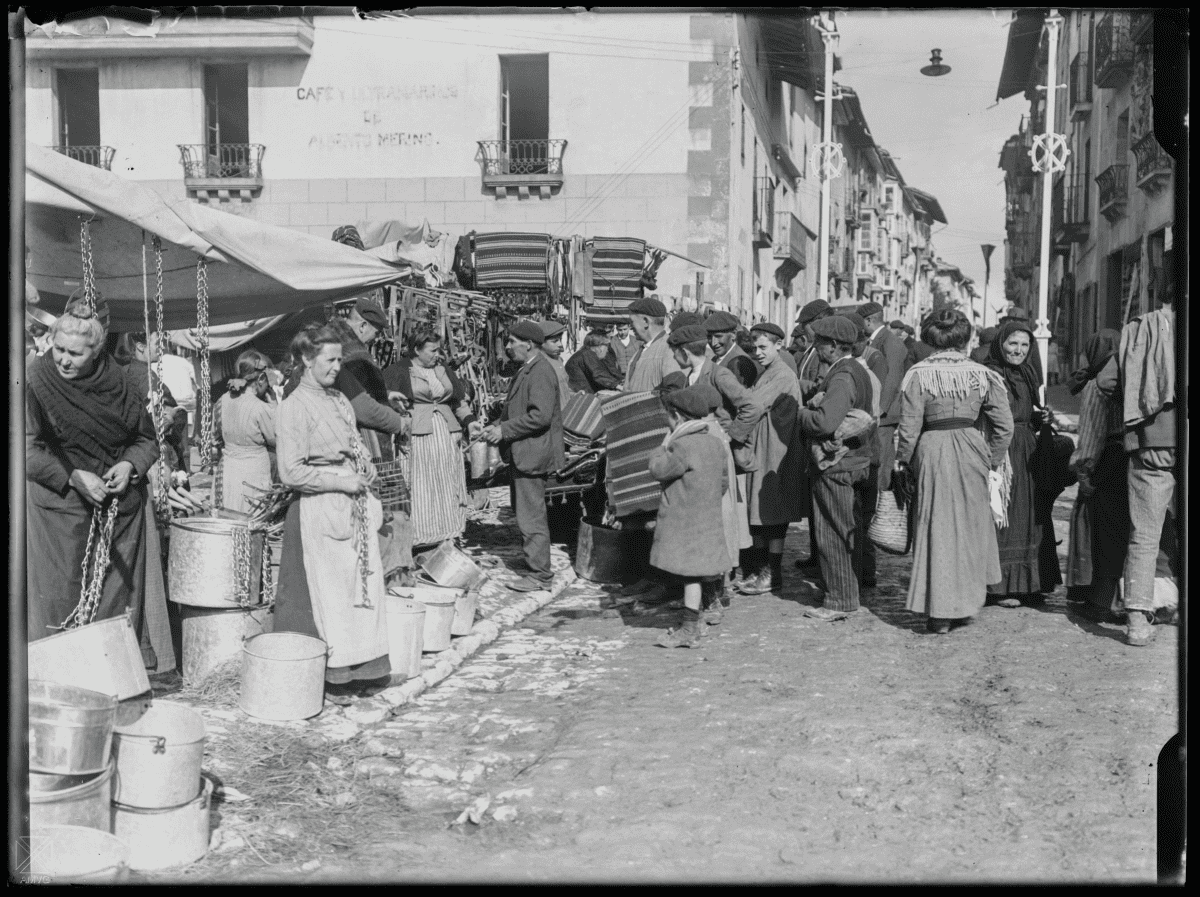
“My father never left the house, and neither did we.” Those who owned land and fields would go to the market in Vitoria on Thursdays, have a coffee, and play cards. They stood out.

The privilege that wealth conferred
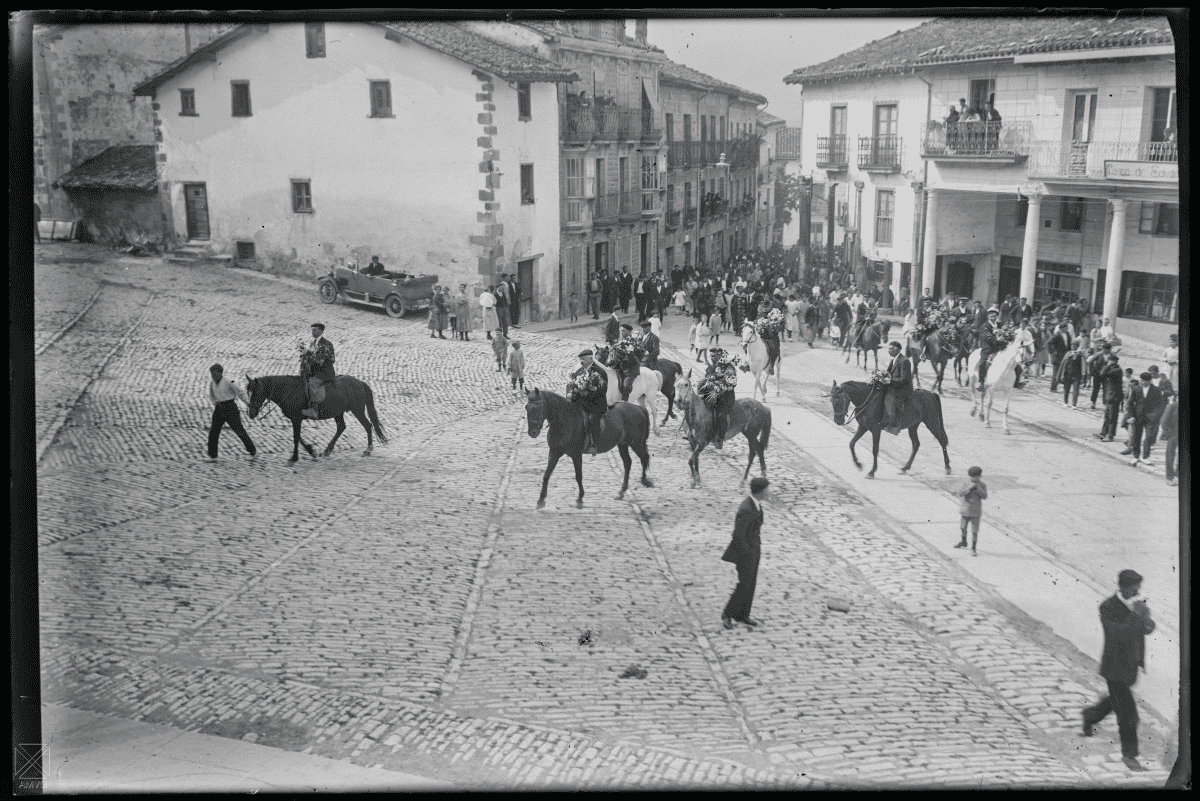
The Azkarraga and Begoña families have always been the most distinguished, and that was also true in Emi’s time, and it was even noticeable in the church. “The chapels had to be reserved for them; the pews and chairs were taken by the wealthiest people, while we sat wherever we could.”
Their grand houses still stand out in the center of Agurain today. Both display beautiful coats of arms and balconies above their stone facades.
Emi knew the Begoña family home very well because in winter, when there wasn’t as much work in the fields, she and her sisters were sent to clean it. Their father received some money for their work, but they never saw it. After all, “marrying off nine sons and daughters in those days was quite a challenge.”

The curfew bell rang and everyone went home.
Young women had plenty of reasons to avoid falling in love with a farmer at all costs. There was no machinery, and oxen, mules, or cows were used to work the land. So, both women and men would pull the animal, wield the scythe, and do everything else.
However, around the middle of the 20th century, when harvesters, tractors, and all the machinery used today arrived, “the ladies” stopped going to the fields as much. Now she would marry a farmer without a second thought, but back then she chose the young José Mari Zalduendo, the blacksmith from San Juan.
That day, her wedding day, at 24 years old, was the first time Emi wore new clothes. Until then, she had always worn what her older sisters had outgrown.
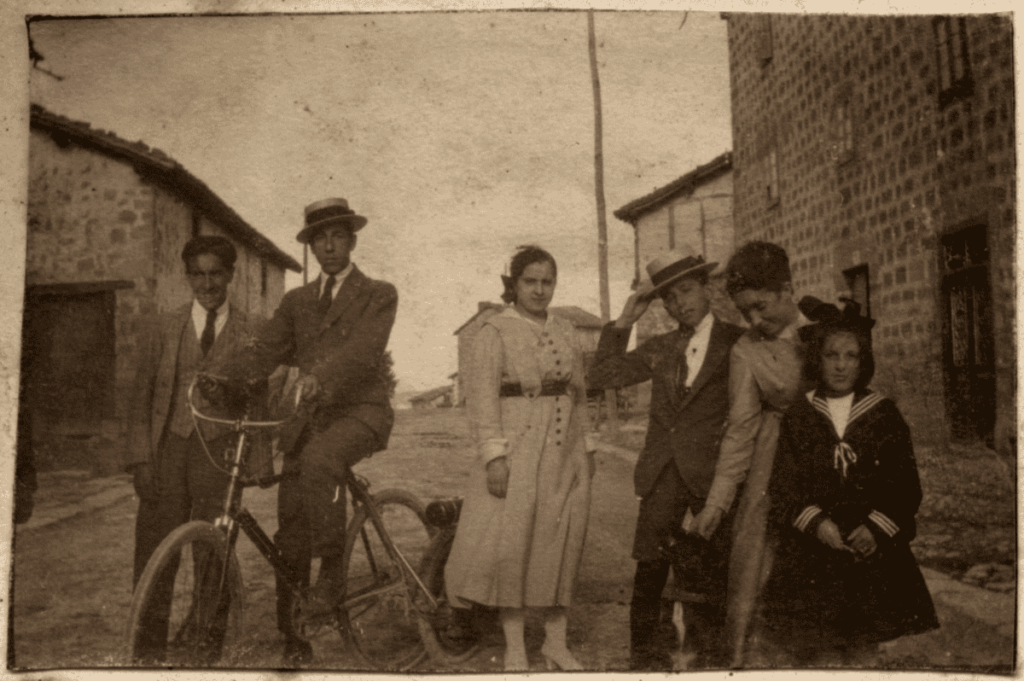
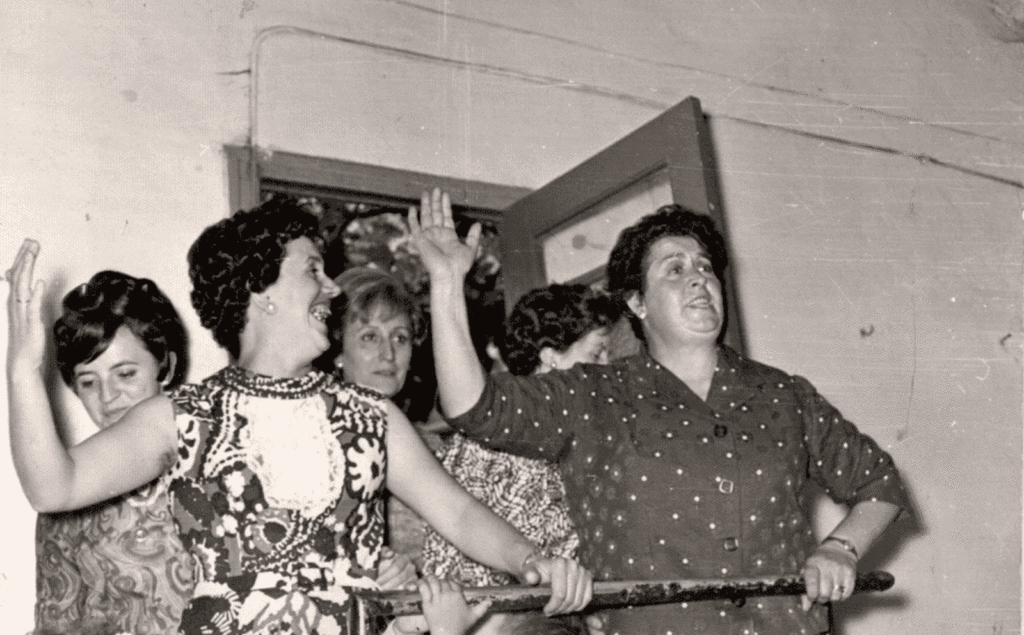
The little time he went out to have fun was to go dancing, and at 9 pm a little bell would ring in the church which was ‘the curfew’, which undoubtedly marked the time to return home, before the priest made his rounds of surveillance through the streets of the town.
There was a cinema in Agurain, but at Emi’s house there was no money, so that pleasure also had to be postponed.

1960s
They did the washing in the washhouses, but also in the river, on their knees, towards Ordoñana, where there was more water and it was cleaner, especially in summer.
They did the laundry in zinc tubs. They put all the white clothes in there and then poured ashes from the low fire over them. That was how they bleached them. After the ashes, they added boiling water. And then, in a wheelbarrow, they took it to the washhouse or the river to rinse it thoroughly and finally hang it out to dry.
The first washing machine Emi had at home was in the mid-1960s. Her two daughters and son had already been born.
The good life, with retirement
Emi knows how to make the most of the time she has after her retirement.
She has traveled as much as she could with the Imserso program, she enjoys spending time with friends, and the senior citizens’ club in Agurain is a great resource for women like her who have already done it all.
Perhaps she would have liked a more comfortable life, with a job like women have today. Before, it was the fields or factories (the leather factory, the tile factory, etc.), but she always worked at home.
She says “at home,” as any farm woman like her would say, a woman who hasn’t stopped working a single day. Together with José Mari, who started their life paying 500 pesetas in rent, they also leased some farmland to supplement their meager family income.
That’s why he thinks that life today is different, easier to live and with more opportunities.
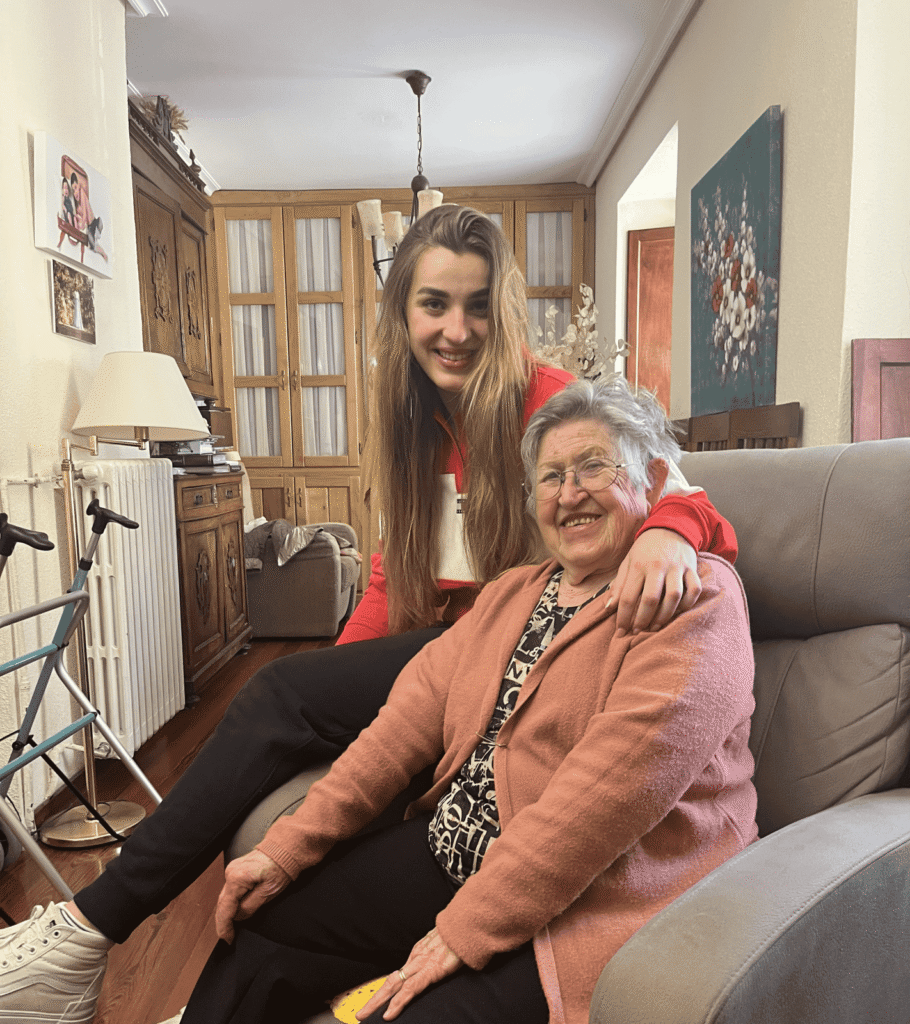
Aimar is 20 years old and listens to his grandmother’s story as if he had never heard it before.

A town with possibilities
He studies in Mondragón, a daily commute that doesn’t bother him; rather, he’s attracted to the idea of moving around.
He would like to live for a while in a big city, but without losing sight of the land where he was born and where he grows up with all the ease and freedom that the village and his youth offer him.
Work isn’t a problem here, where there’s a strong industrial tradition. However, something has changed; the atmosphere isn’t as vibrant anymore, the party scene has moved elsewhere. Aimar chooses Vitoria to enjoy himself on weekends.

The forbidden Basque language
Emi looks at her grandson with admiration and explains that the young man spent the summer working at the Atusa factory; “there are definitely opportunities in Agurain.” What the grandmother envies most is that he speaks Basque, and that children learn it from a young age.
“What a bad year we were born in,” he laments. No one in his house spoke it, but then again, it was forbidden during Franco’s time. So much so that young people from the Guipúzcoa region came to Agurain, to the farmhouses, to work and learn Castilian.
“They would come up to us to listen to us speak,” and when they knew Spanish, or at least could hold their own, they would go back home happy.