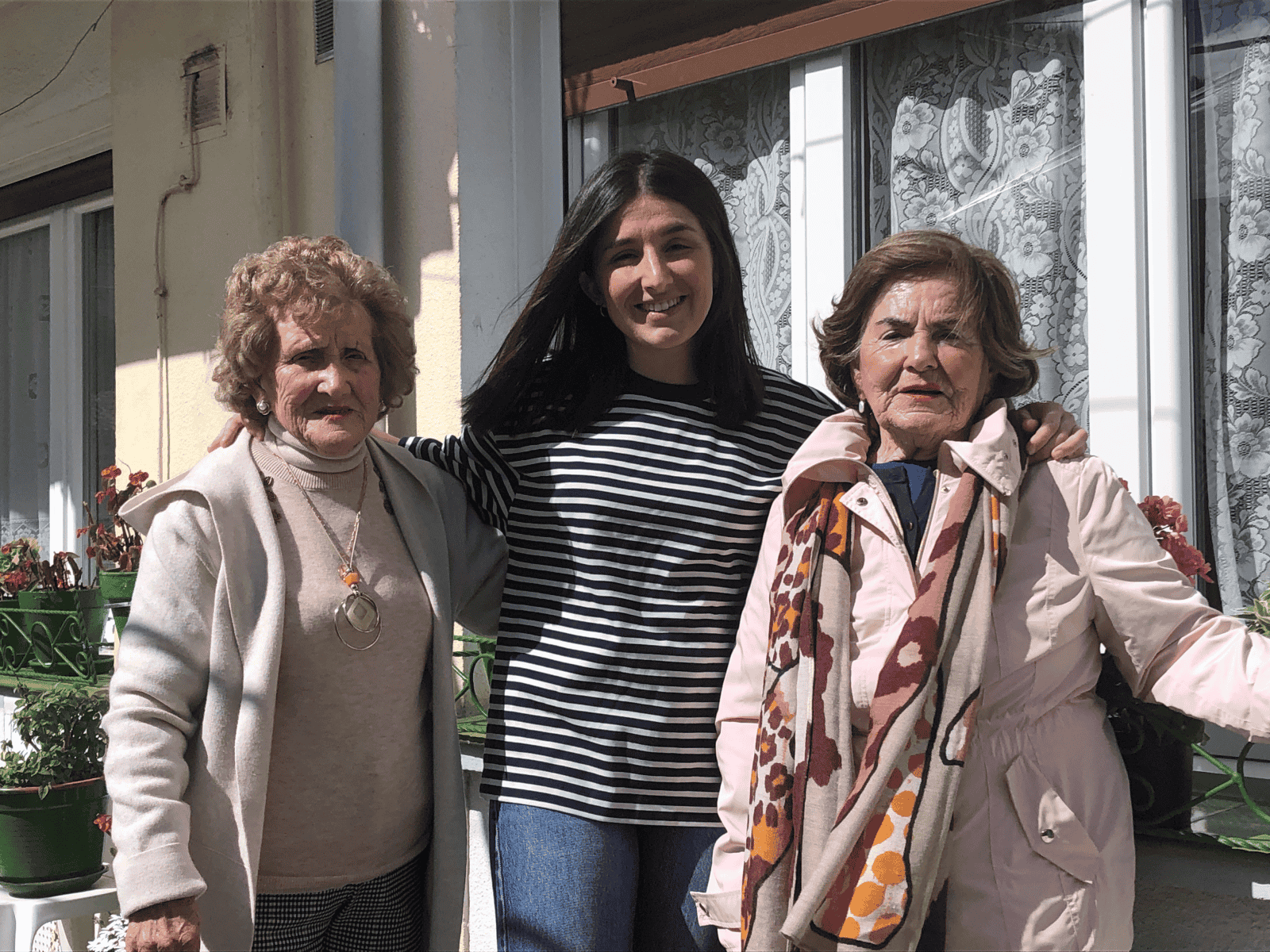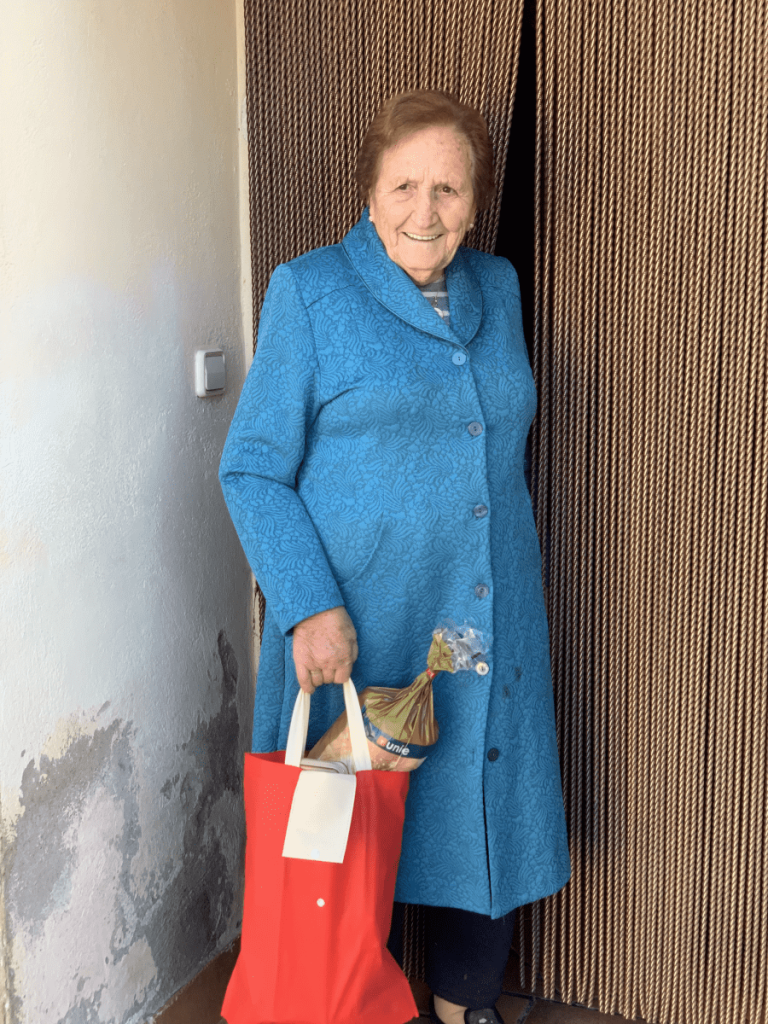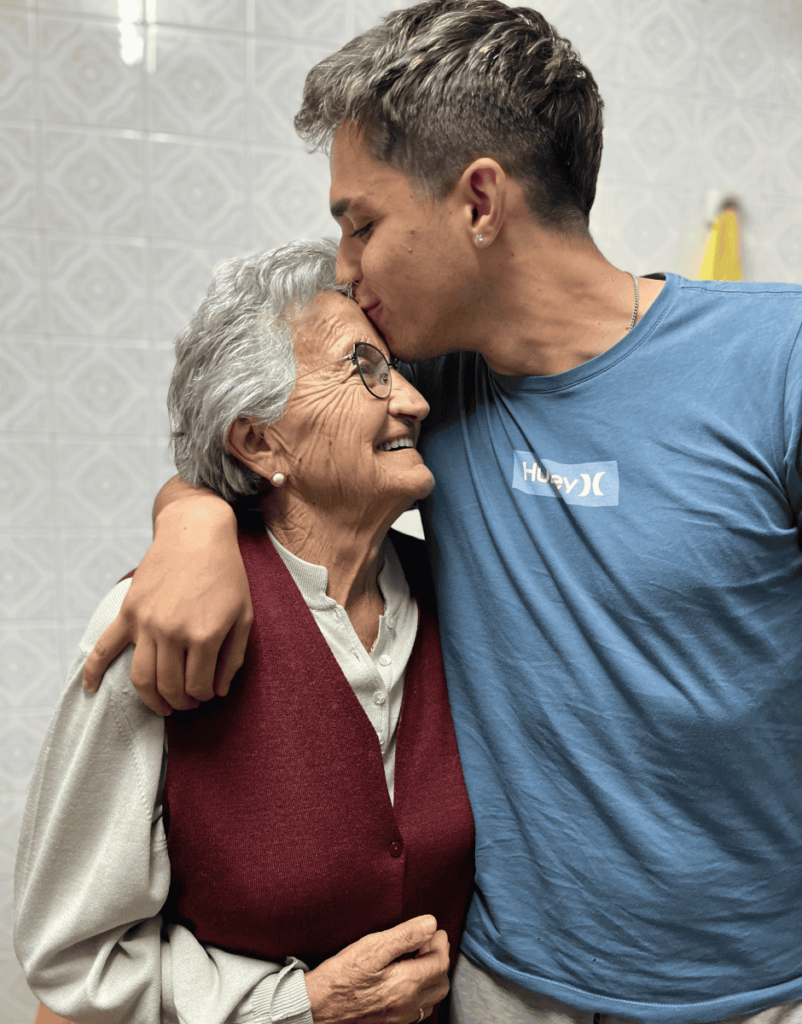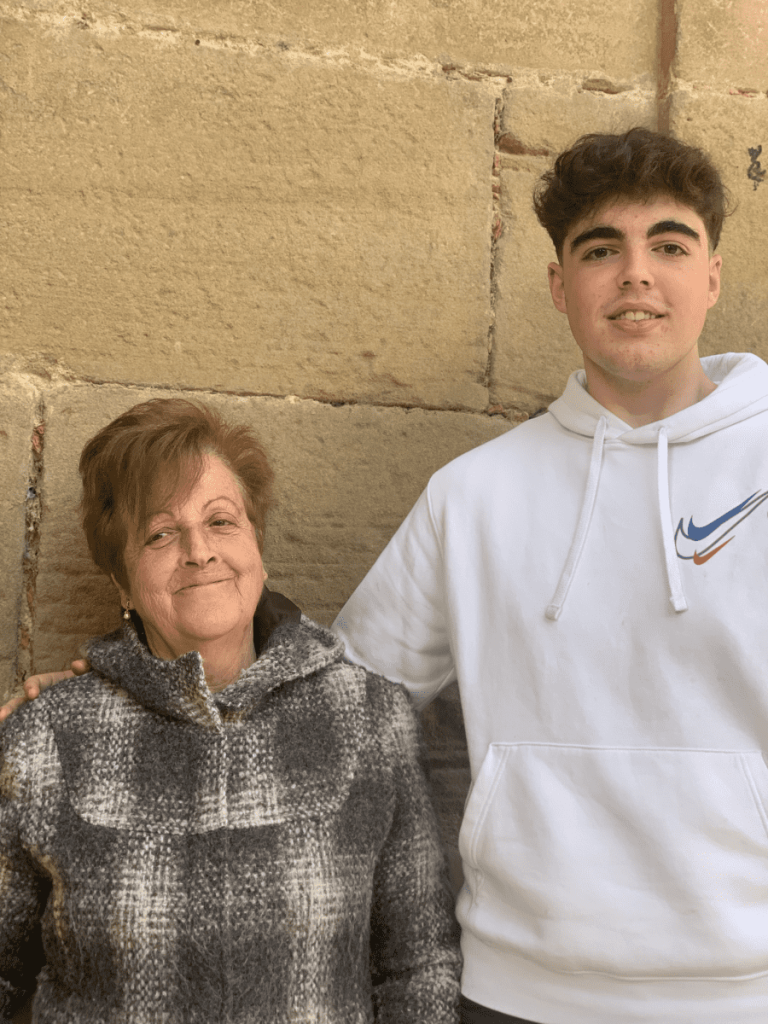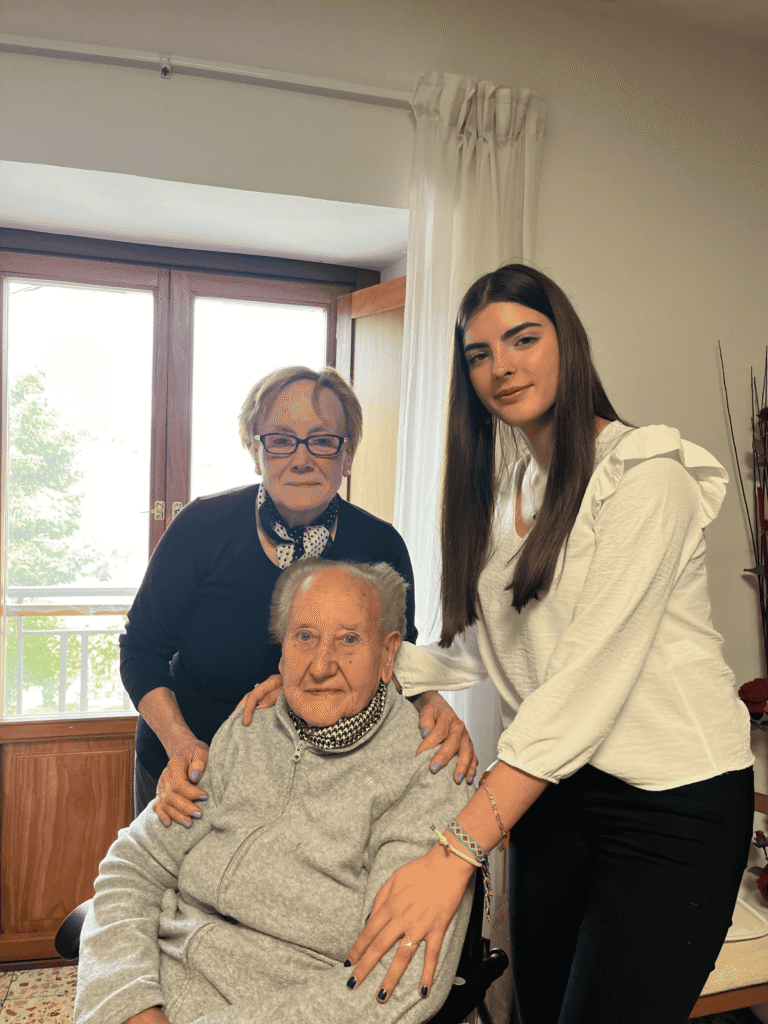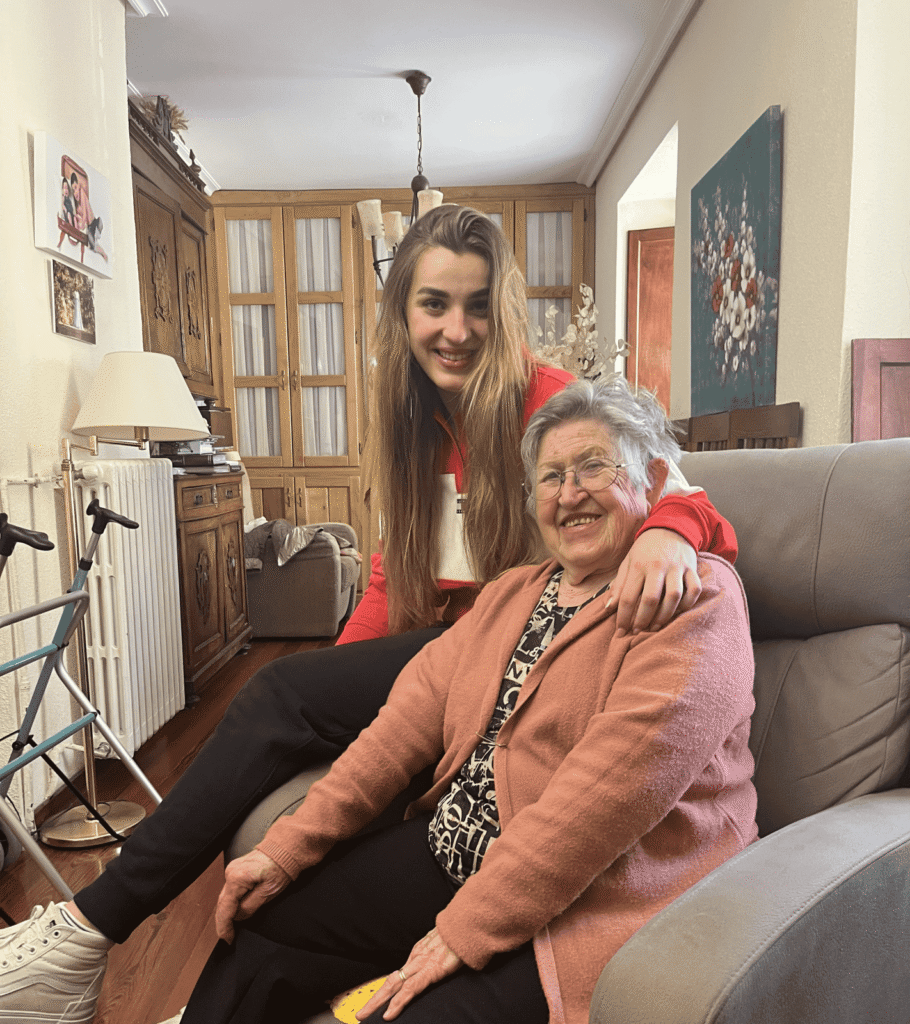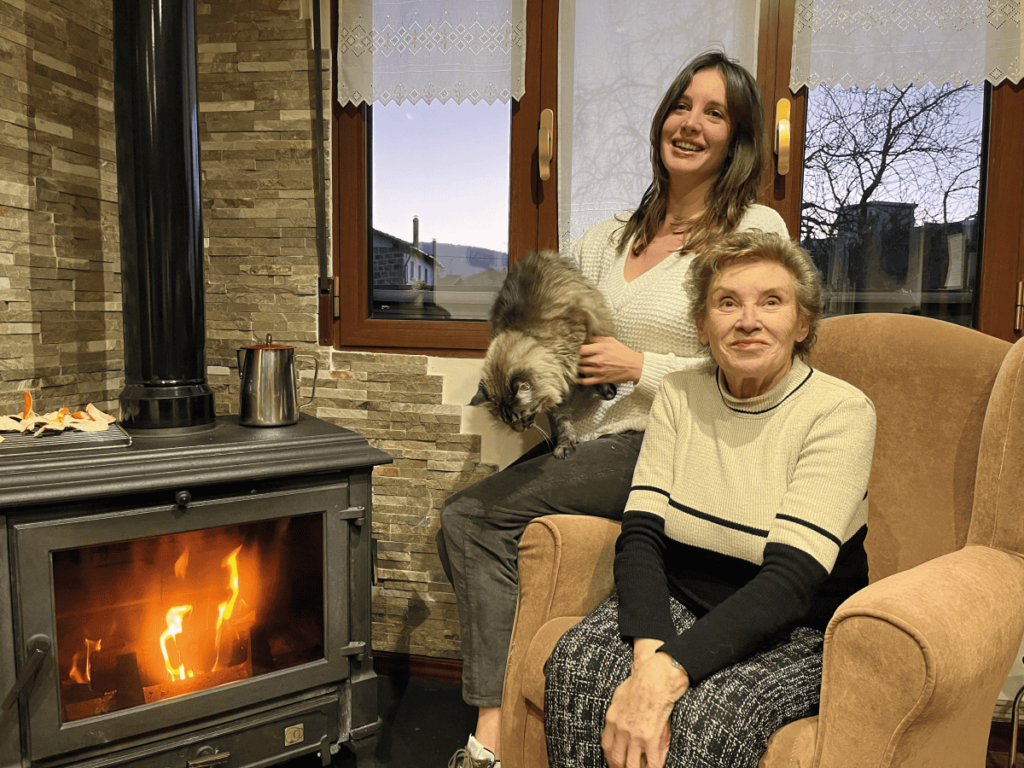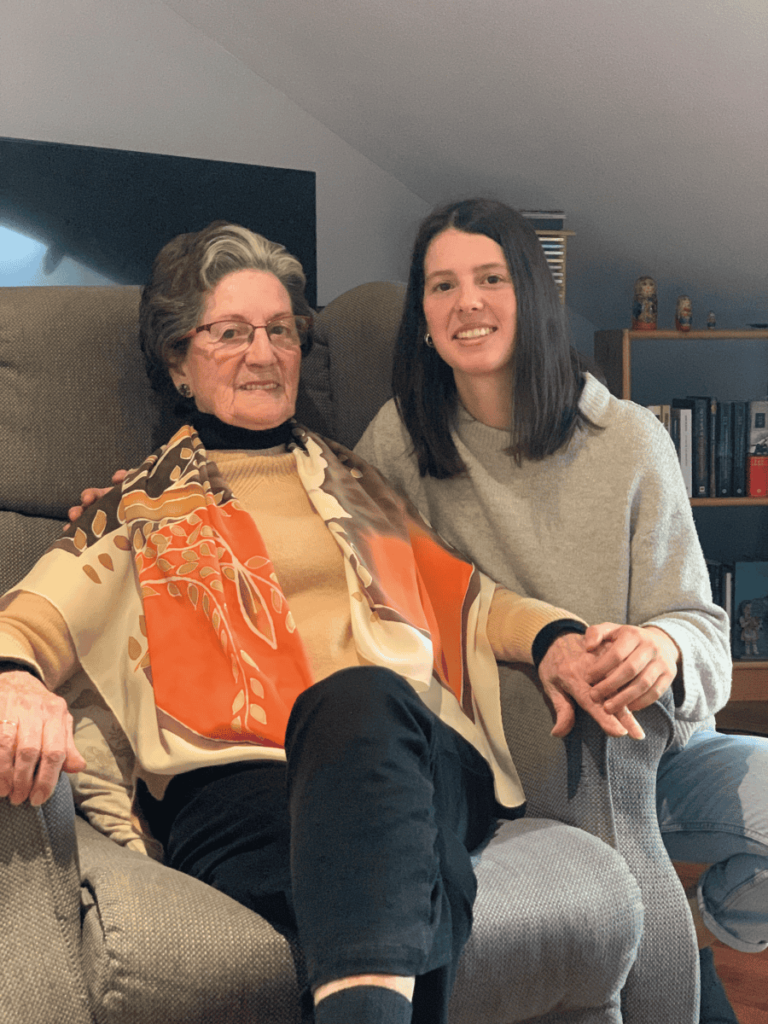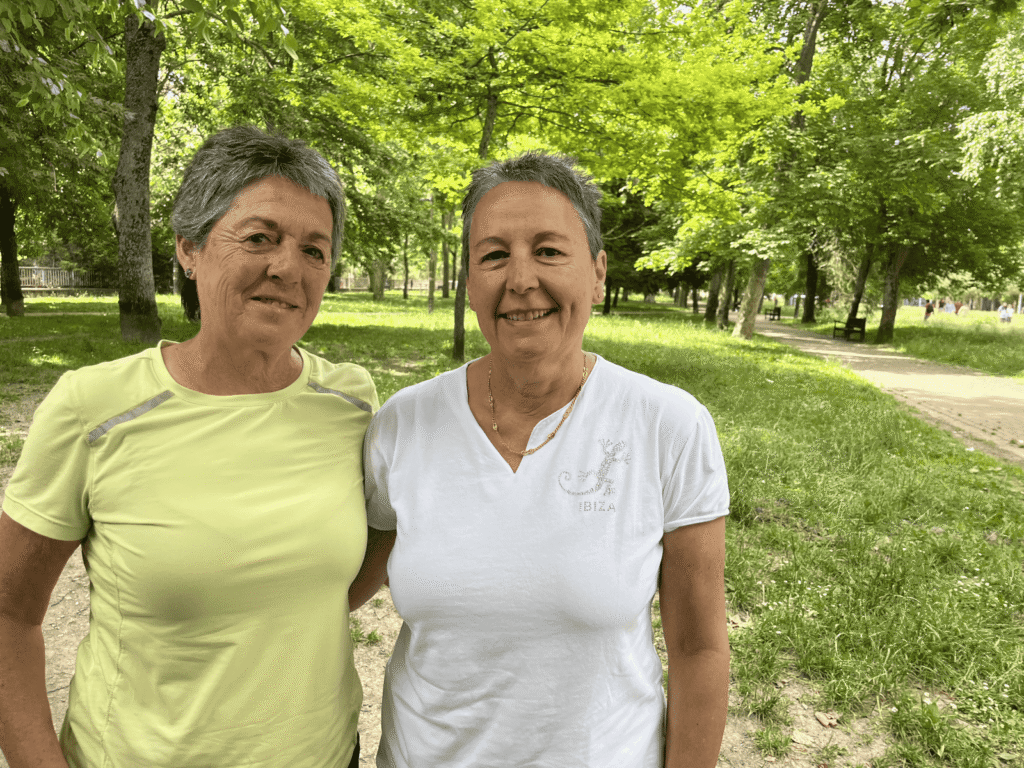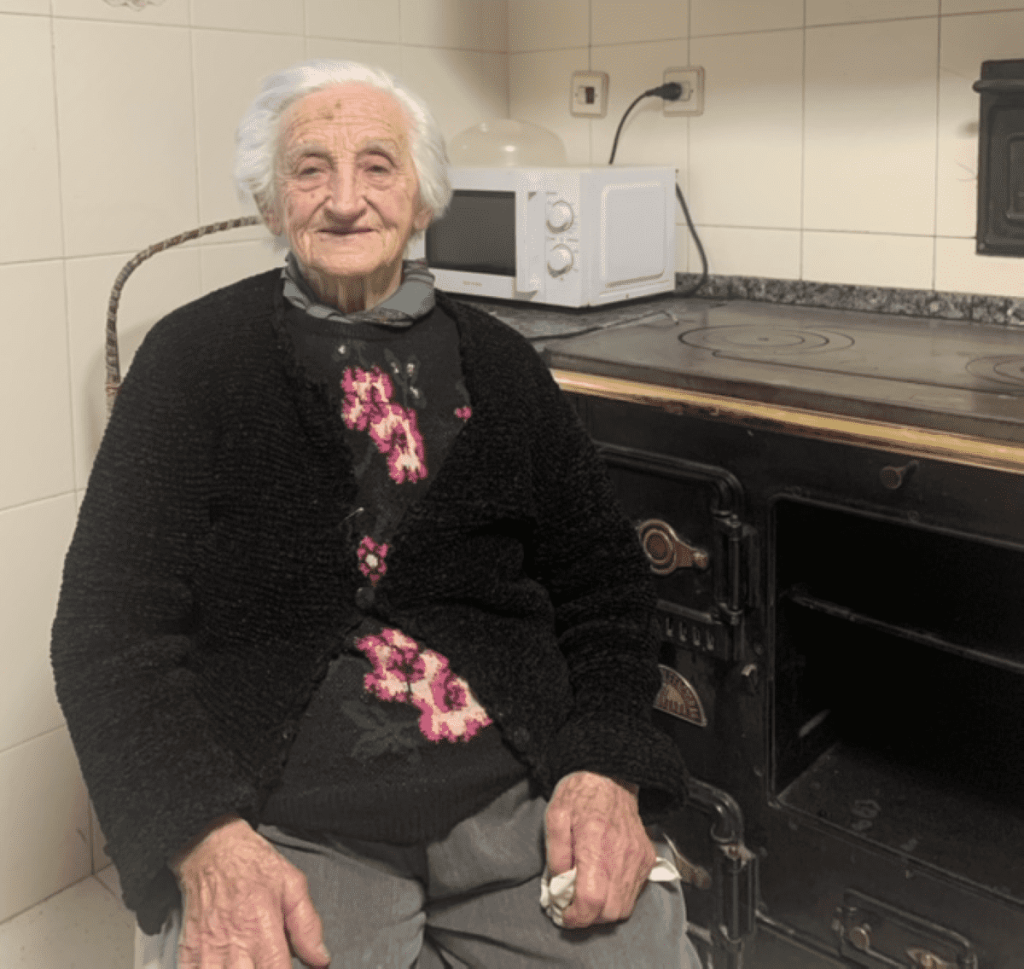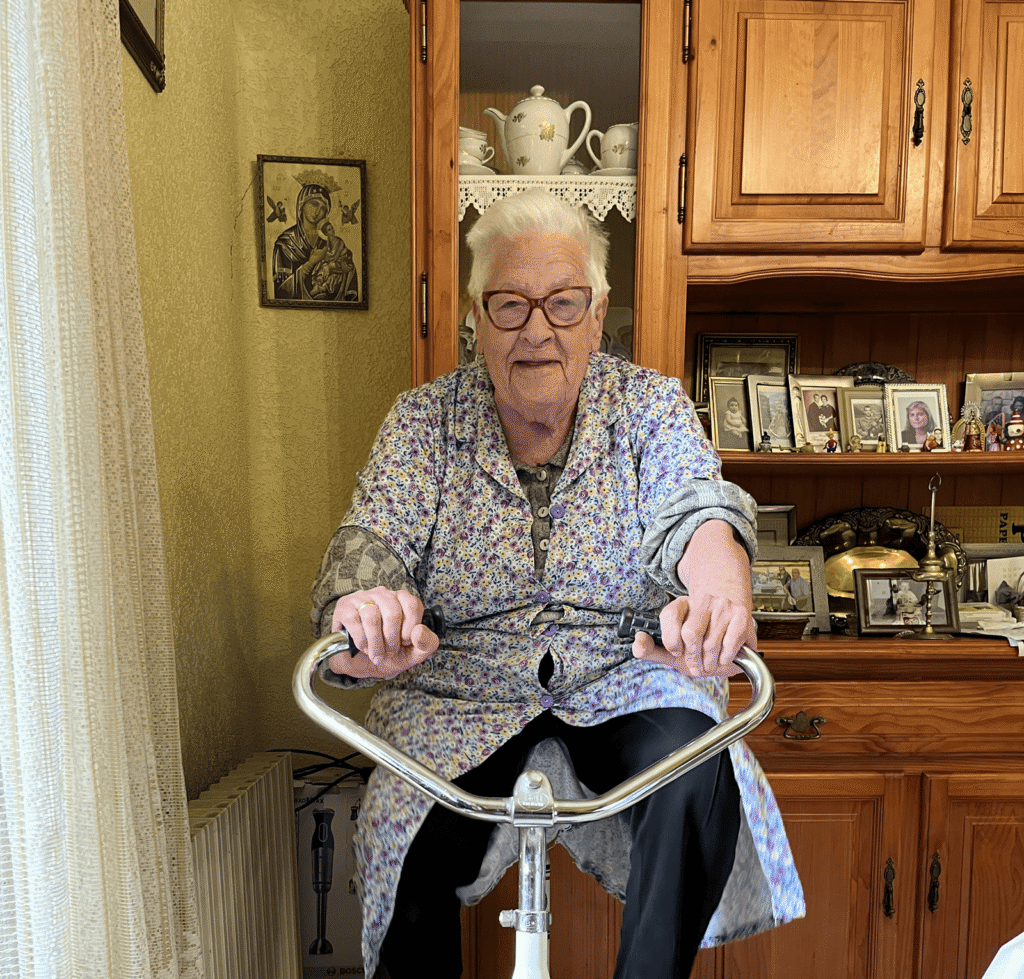
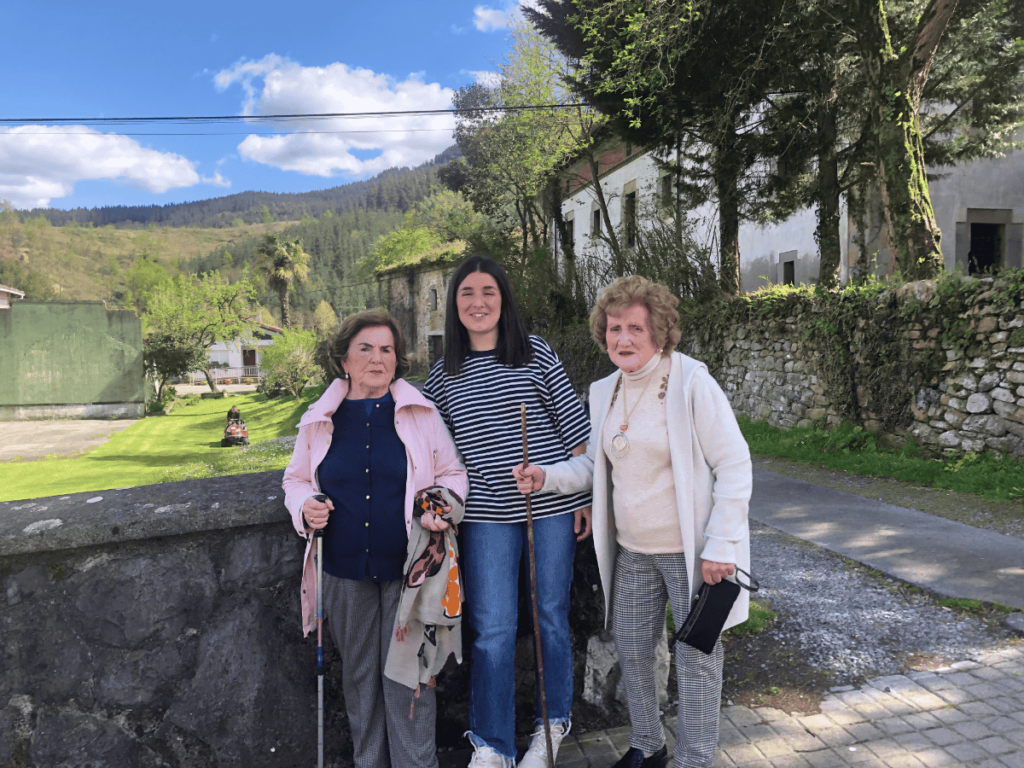
Every afternoon Libe and Primis go for a walk. They stroll through the village, exploring it as if they were going to meet familiar people and places. Sisters since they were born in a farmhouse in Zuaza, back in the 1930s, they have always been part of this community; they are part of it.
Libe, the eldest, lives in the same town square—the square of today, not the one of yesteryear—in a two-story house that her husband and a brother built for their families. Opposite her, but some distance away, is Primis’s house, also built to accommodate her large family.

That is the distance that separates them, no more and no less; the same distance that allows them to meet in the everyday gestures of the morning, when one opens the curtain while having breakfast and the other goes out to sweep the terrace or water her many plants. Without seeing each other, they feel each other, they know they are together, and they wait for each other until they meet on their afternoon stroll.
The mountain was scary
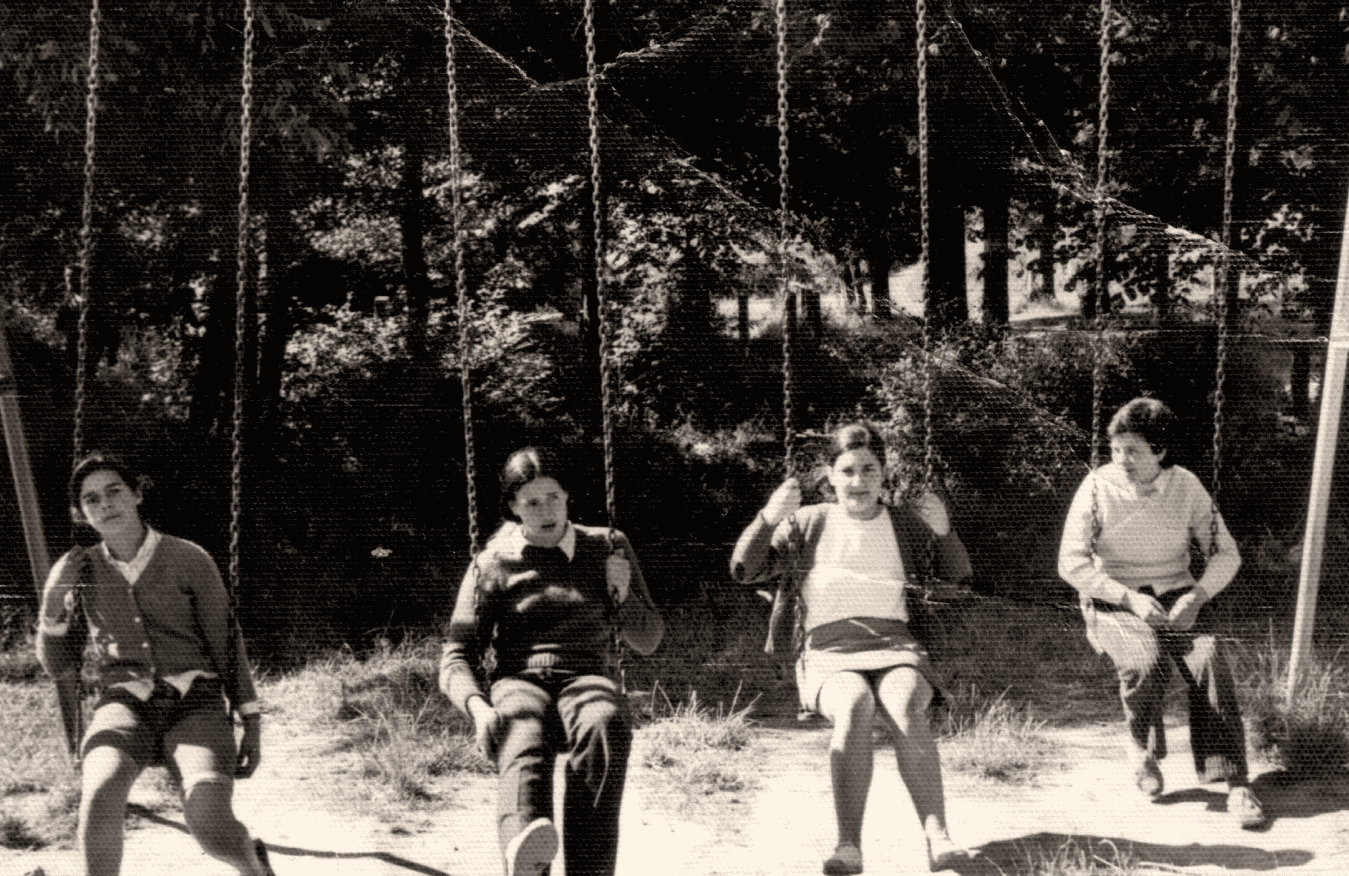
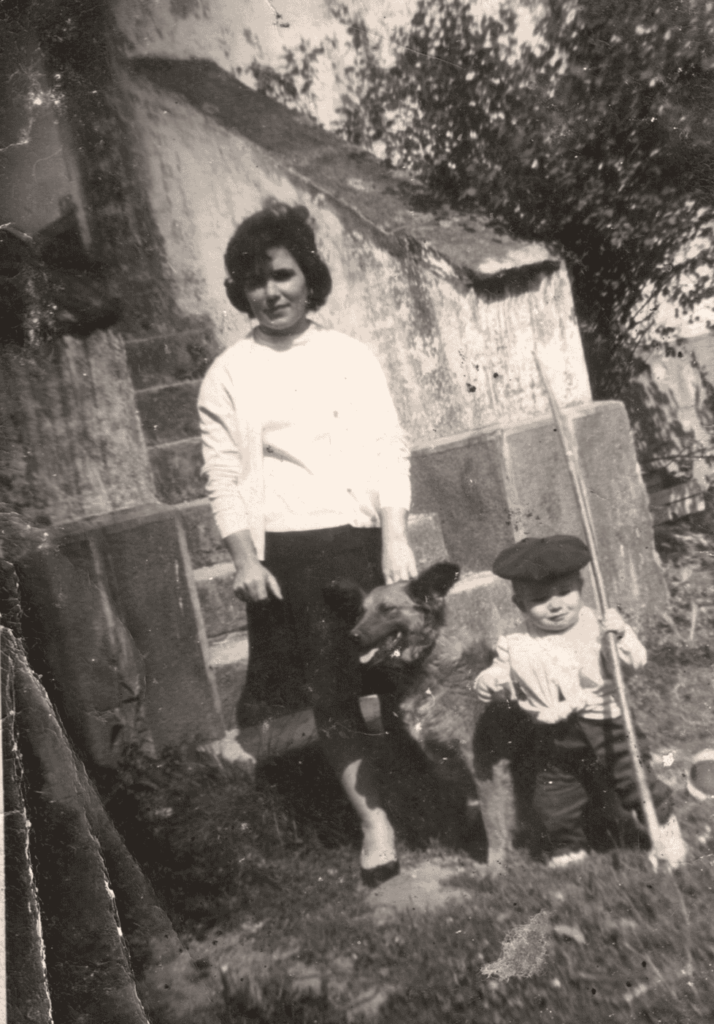
They remember their childhood as good, and they don’t forget the elegance of a mother who, when it was time to take a family photo, took her three girls to a hair salon in Bilbao.

They were good people, and the girls studied at the school in Zuaza until they were fourteen. That didn’t stop them from quickly learning to milk cows or help with the laundry. Anything was possible in a time when time was measured by a very different standard.
Surrounded by woods, their greatest fear was ‘the milk-sucker,’ a character popularly used to frighten children. When Primis mentions it, she acts as if she still doubts its existence, while laughing with that old-fashioned innocence.
Family and bar (no set hours)
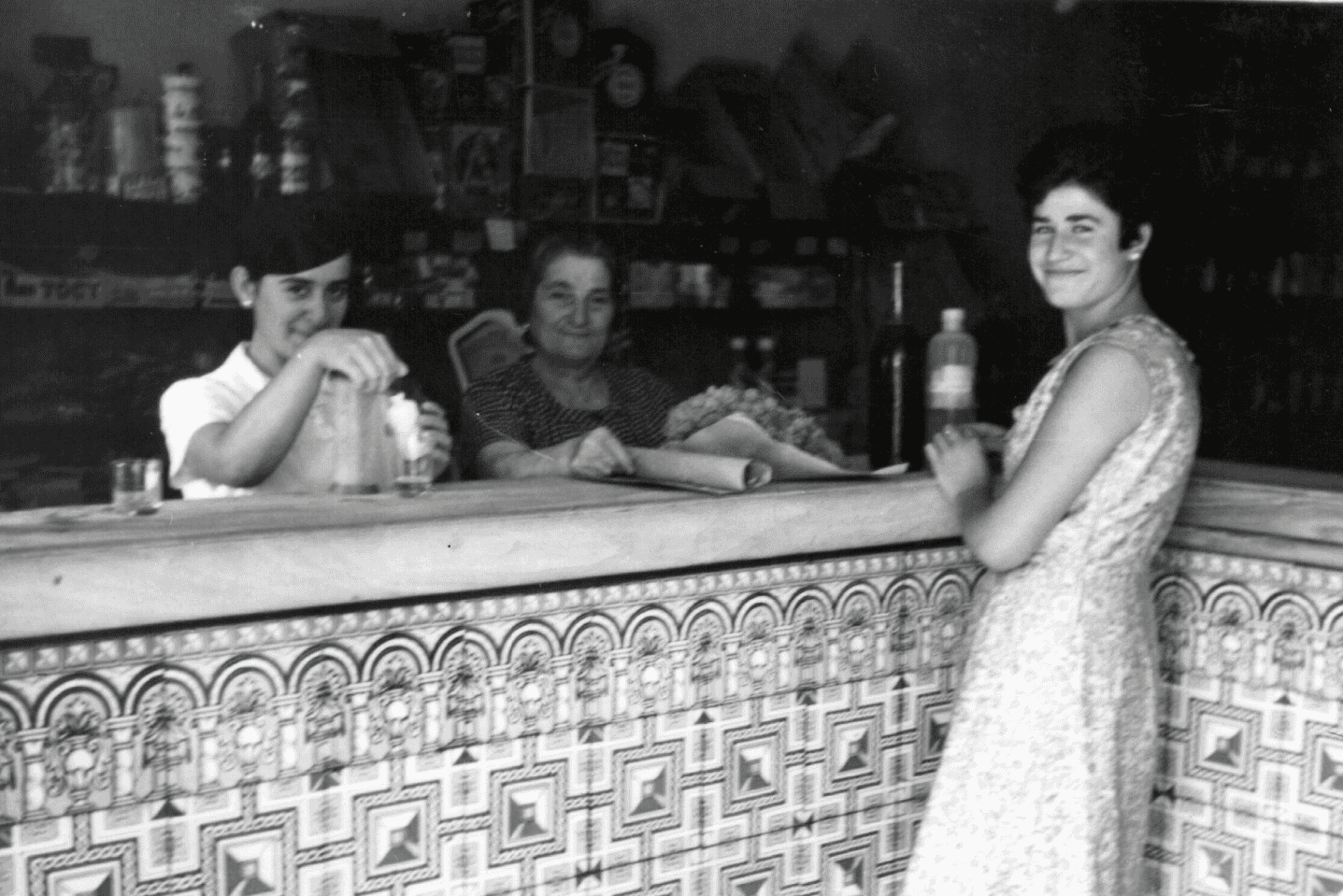
Libe arrived in Okondo already married to Benito. She left her first child at home in the care of her mother and sisters. While he worked in the mountains, she took charge of a bar. At that time, it was the ground floor of the Padura farmhouse, across from the church. Libe’s bar could be considered the origin of the oldest tavern still in town today, Bar Txaparro, where wine is still served. Now it occupies the space of a shop in an apartment building, but back then it was something more authentic, the entrance to a farmhouse through its large gate.
The bar never closed, except at night, when Libe took the opportunity to review the multiplication tables so as not to get confused later with the change he had to collect.

“The sick used to come to the bar to get better, and I would act as nurse, cook, serve, and whenever I could, I would knit between tasks.” And on Saint Sebastian’s Day, the entire procession coming down from the Otaola pilgrimage in the mountains would stop by to enjoy a delicious sea bream that she had cooked with great care.
The village doctor, Don Antonio Ipiña, “came from around here” and ended up living at Libe’s house as a boarder, a ward, as they used to say. They always addressed each other formally; it was a relationship of respect—the old-fashioned kind—and it lasted forever. His meals were brought up to his room every day, and he only came down to the kitchen with the family at Christmas. Libe was the one who buried him; “no one from his family came,” and even today, at 91, she takes care of his niche in the cemetery. “I have him buried in Okondo,” she tells us wistfully.

Keeping up with life
And Primis, the sister, before meeting Sebas, her husband and the father of her 10 daughters and sons!, already had a bicycle. She climbed all the hills and peaks of the Ayala Valley.
When she turned 18, she walked with her mother to Orduña to buy some shoes and finally wore stockings. That didn’t stop her from riding her bike for miles to the town of Llodio, wearing a skirt and heels.
Young women did not wear trousers then, and they did not wear them until long after they were married, but from a very young age she made her daughters wear dungarees.
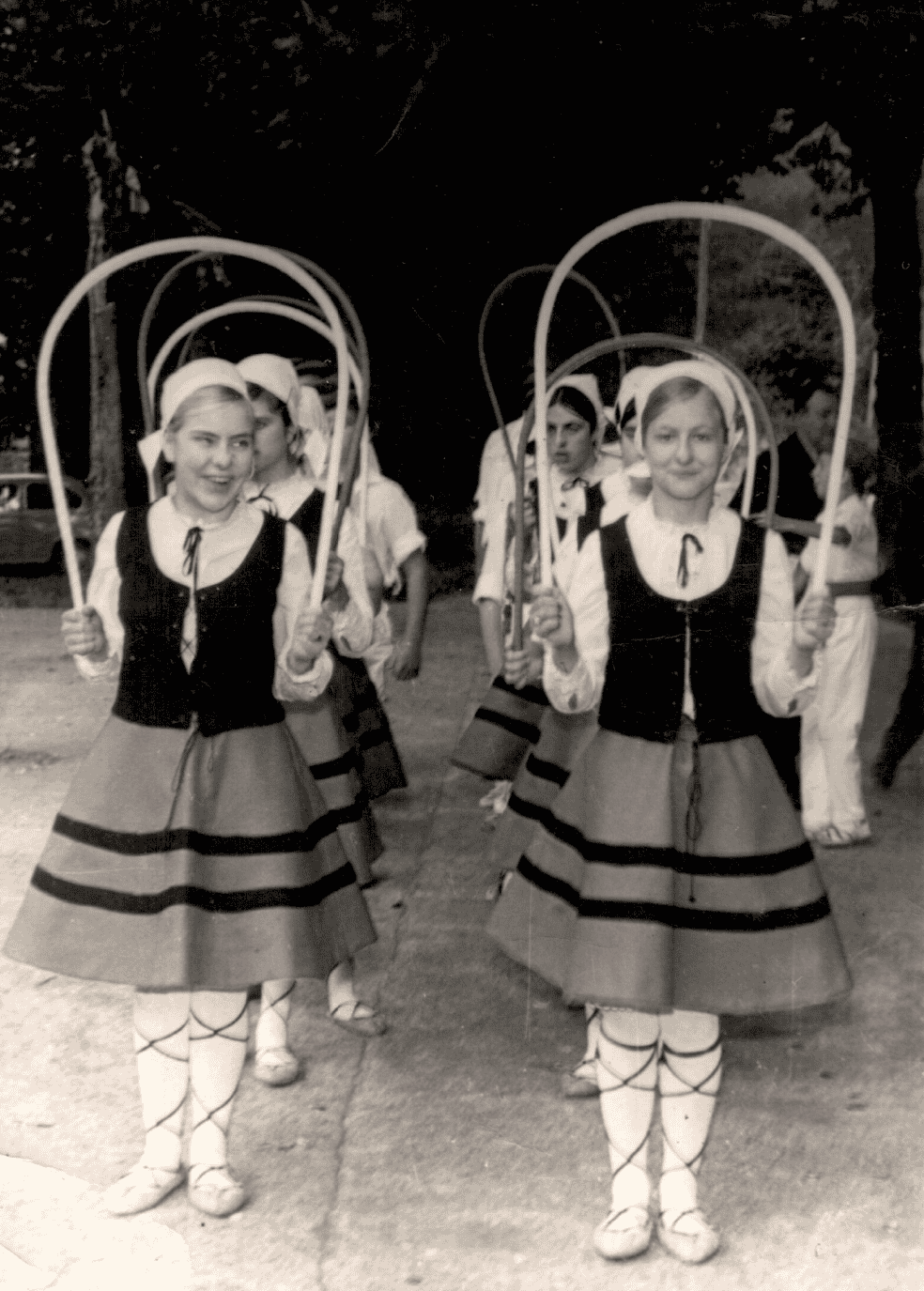
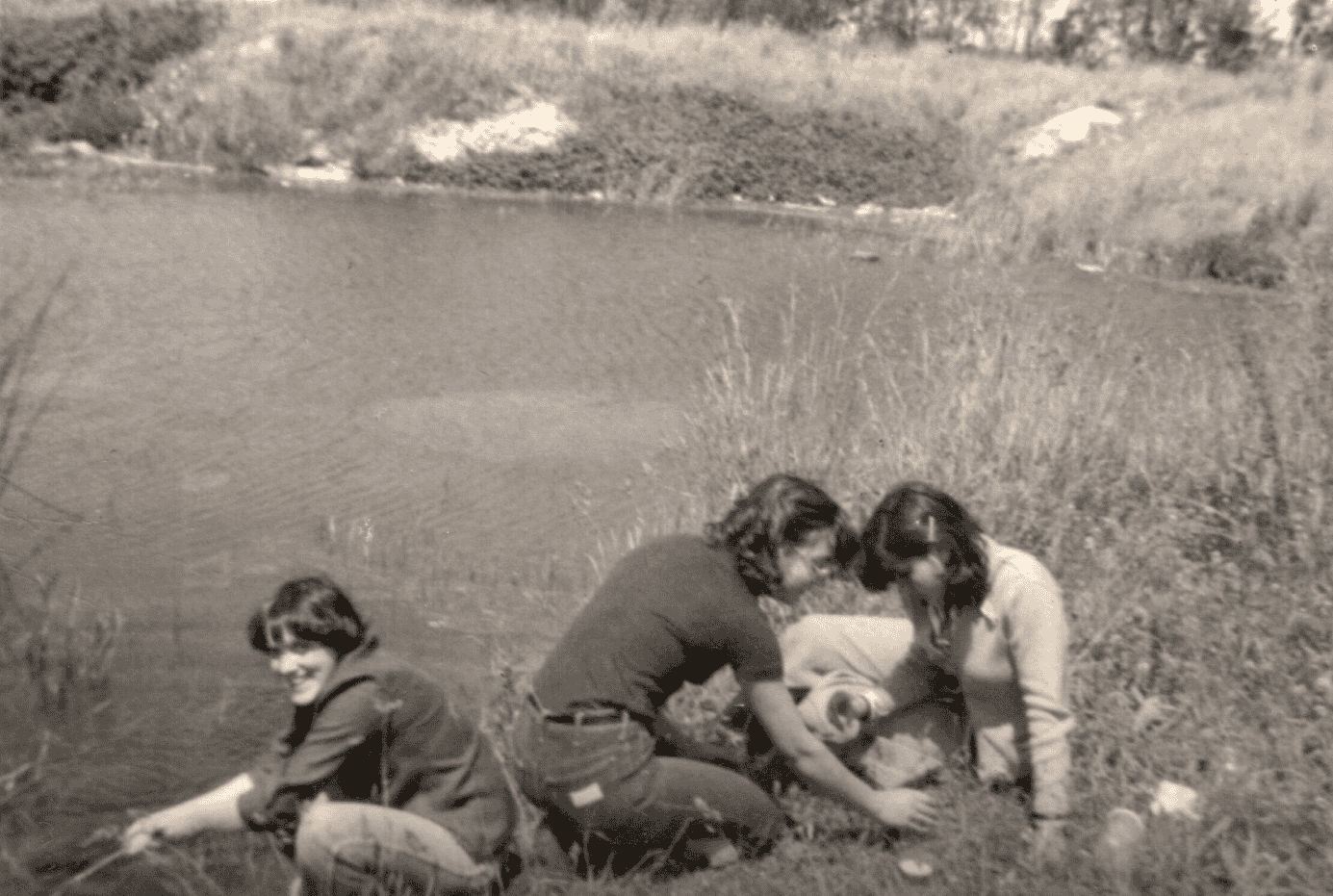
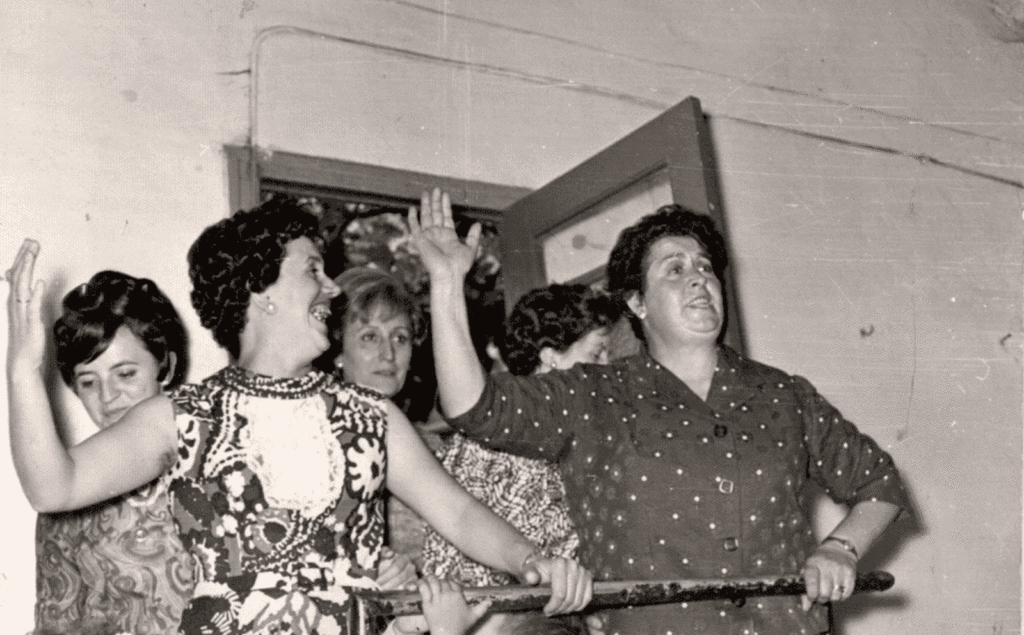
What wasn’t true for them, they saw in the younger generations, and they always liked to keep up with life. They didn’t go to bars; they enjoyed themselves at dances, where the boy paid 5 pesetas for a piece of paper pinned to his lapel. This badge allowed him to dance with the girls until they became engaged; then neither the boys nor the girls changed partners.

10 and calmly
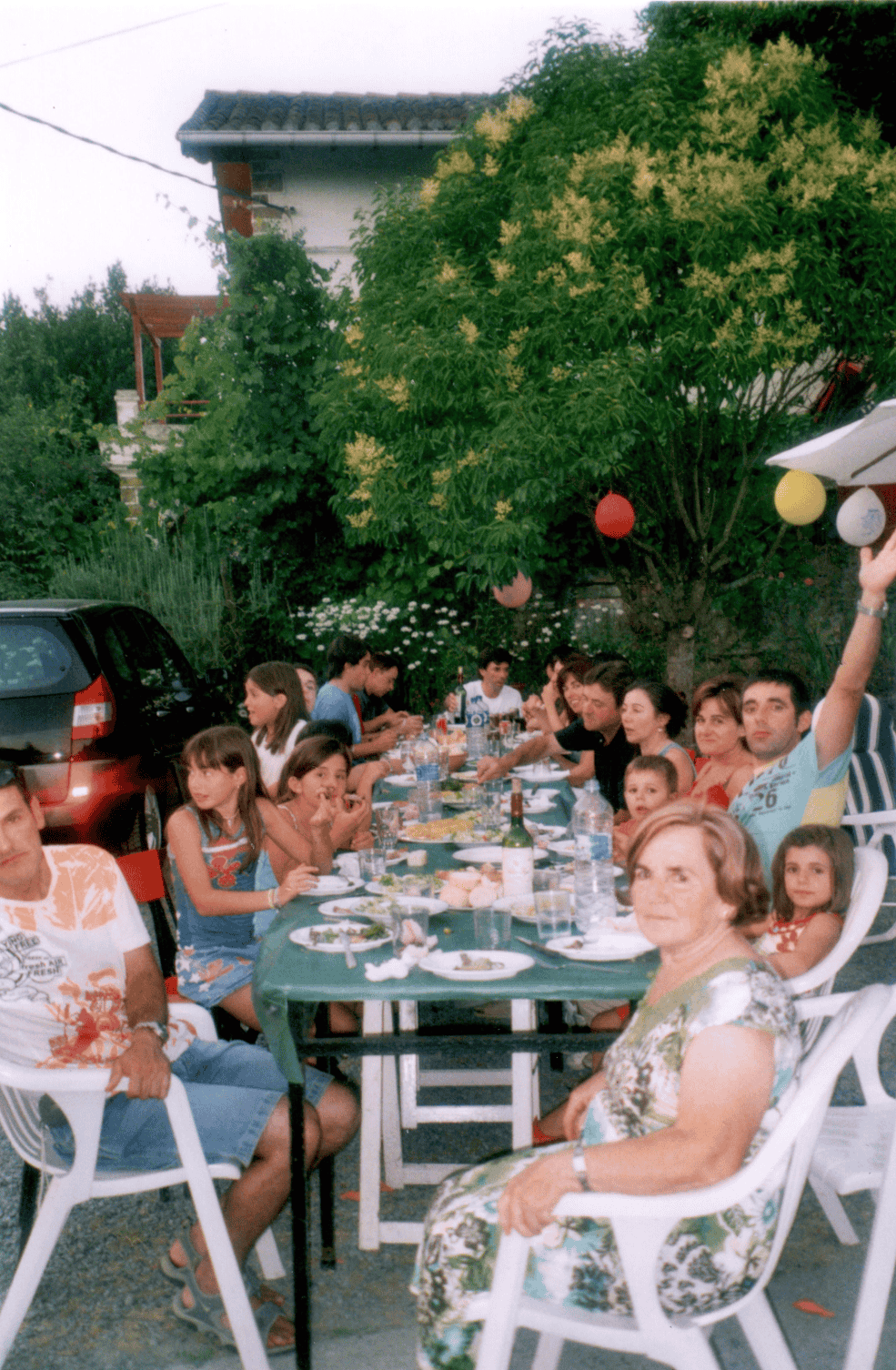
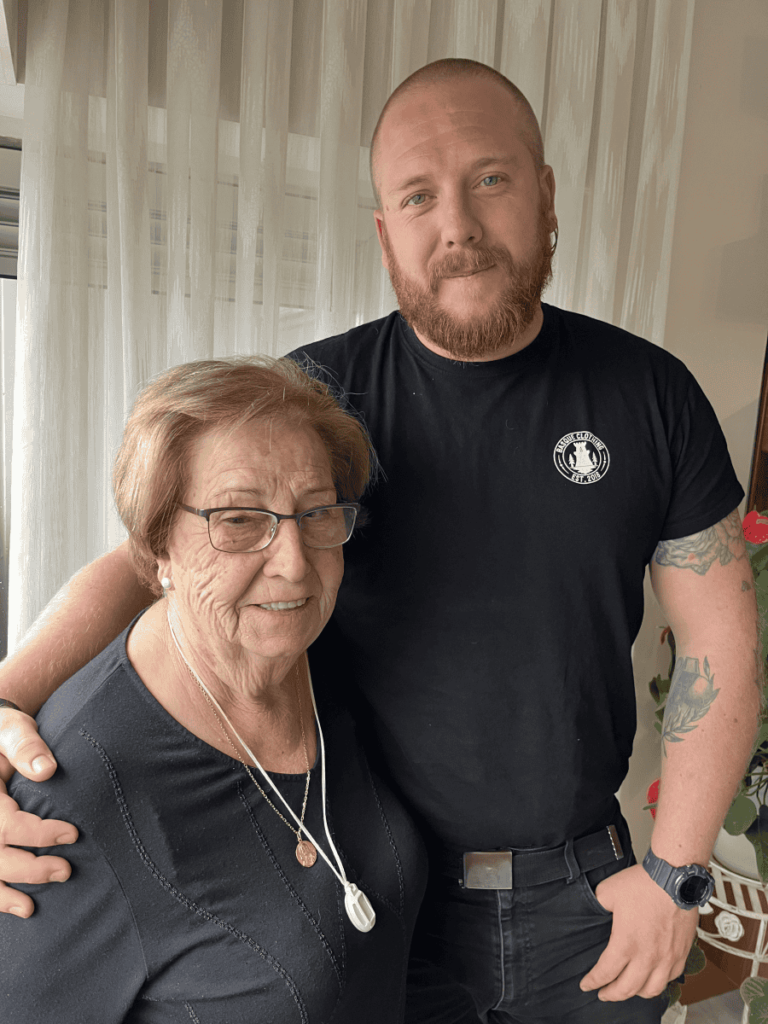
Guiomar, Primis’s granddaughter, listens to them in admiration. She sees genuine joy in their expressions. Her grandmother had six daughters and four sons—she recounts quite naturally how she had up to three cribs in the room at once—and narrates the many times when she and Sebas went out to dinner with friends at a txoko (a Basque social club), or when parties were organized in her own kitchen.
Libe and Primis’s homes have always been open to the world, welcoming anyone who came to spend some time with the family. From there, it was only a matter of time before someone was invited to sit at the table or even occupy a bed.
Back to how things were before
Guiomar has lived in Okondo her whole life, and when she hears about the many social gatherings, the lively parties, and the everyday life of the past, she feels a touch of envy and thinks that the town she lives in today isn’t the same as the one she’s told about. She admires their devotion to family and the desire these two women still have to enjoy life and keep learning.

“They lived more in the present moment, with a different kind of tranquility, not like we live now, and they didn’t shut themselves away, but socialized a lot,” Guiomar comments with a touch of nostalgia.
When she was a teenager, summers were amazing; there were always people to go out with, to the swimming pools, and especially to parties. Today, people her age don’t go out here. She puts her hopes in the new generations, “there are quite a few kids and young people who might be able to bring back what it used to be.”

The video call
Primis acknowledges that with so many children at home, when there was commotion and criticism always arose in a town, she kept quiet because she knew that “one of my children was nearby.”
Libe, with 3 great-granddaughters and 3 great-grandsons, and Primis, with 13 grandchildren, 8 of whom are girls, and one great-grandson, have managed to adapt to the new times and even to technology.
Primis went to learn how to use the tablet at one of the courses scheduled at the Kultur Etxea, and Libe, whose daughter has lived in London since she was young, communicates with her every night via video call.